Last Updated: August 28 2026
In Ontario, does a tenant have to repaint or replace carpets at move-out for normal wear and tear?
In Ontario, a tenant generally does not have to restore the rental unit to the exact condition it was in at move-in, and they are usually responsible only for repairing or paying to repair “undue damage” caused willfully or negligently, not ordinary wear and tear like paint scuffs, worn carpet, and small nail holes. Under the Residential Tenancies Act, 2006, a landlord may seek compensation only for undue damage (and the amount is meant to put the landlord back in the position before the damage, without betterment). Cases such as Doucette-Grasby v. Lacey, 2013 CanLII 95661 confirm that tenants are not liable beyond ordinary wear and tear, including that paint jobs do not last forever and touch-ups may be part of normal daily living. If you are dealing with a move-out claim, visit Byfield Legal Services or call (289) 927-7365 to discuss your situation with an Ontario paralegal service and get next-step guidance.
Add this website to Google Preferred Sources
A Tenant Is Responsibile Only for Damage Unduly Caused
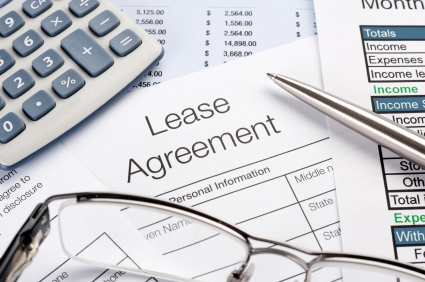 At the end of a tenancy, especially if the tenancy was a long-term tenancy, the rental unit is likely in a state of repair that differs from the state of repair as existed when the tenant first took occupancy of the unit. Perceiving that a tenant is legally obligated upon vacating the unit to leave the unit in the same condition as the tenant received the unit, a landlord may bring legal action against the tenant for the cost of making repairs that bring the unit back to the initial condition. Unfortunately, for the landlord, the tenant should be liable only for undue damage rather than due damage being damage reasonably expected and contemplated as likely to occur from the forces of common daily living.
Note: Please contact Byfield Legal Services by phone at: (289) 927-7365 to discuss any specific questions that you may have.
The Law
The Residential Tenancies Act, 2006, S.O. 2006, Chapter 17, addresses the issue of compensation for a landlord due to damage to a rental unit caused by a tenant, an occupant, or a person permitted onto the premises by the tenant. Specifically, the Residential Tenancies Act, 2006, states:
Application for compensation for damage
89 (1) A landlord may apply to the Board for an order requiring a tenant or former tenant to pay reasonable costs that the landlord has incurred or will incur for the repair of or, where repairing is not reasonable, the replacement of damaged property if,
(a) while the tenant or former tenant is or was in possession of the rental unit, the tenant or former tenant, another occupant of the rental unit or a person permitted in the residential complex by the tenant or former tenant wilfully or negligently causes or caused undue damage to the rental unit or the residential complex; and
(b) in the case of a tenant or former tenant no longer in possession of the rental unit, the tenant or former tenant ceased to be in possession on or after the day subsection 21 (1) of Schedule 4 to the Protecting Tenants and Strengthening Community Housing Act, 2020 comes into force.
Application under subs. (1)
(a) while the tenant is in possession of the rental unit; or
(b) no later than one year after the tenant or former tenant ceased to be in possession of the rental unit.
Defining Undue Damage
Understanding what is "due damage" requires objective review of what is normal wear and tear given nature of the tenancy. For example, a worn carpet after only one year of tenancy by a single person may be undue damage; however, a worn carpet after ten years of tenancy by a family of with four children may be, or should be, fully expected., This principle was stated clearly in the case of Doucette-Grasby v. Lacey, 2013 CanLII 95661 where it was stated:
43. Despite any provisions in a lease such as are contained in Exhibit 1, the original lease in this case, a residential tenant is responsible for the repair of undue damage to the rental unit caused by the willful or negligent conduct of the tenant or persons she permits in the premises. (Residential Tenancies Act, 2006, S.O. 2006, c. 17, s. 34) A tenant is not required to return the premises to the state they were in at the beginning of the tenancy. A tenant is not liable for anything beyond ordinary wear and tear. A tenant is responsible for undue damage.
44. The use of the term undue damage implies that there exists a concept of due damage. Due damage in my view includes ordinary wear and tear, and other things that any reasonable tenant would do while living in the house: hang a few pictures, rub up against the walls at times.
45. Moreover, paint jobs do not last forever. Paint gets worn off by traffic, it gets marred by the ordinary activities of daily living, it gets dirty and darkens from smoke or kitchen fumes, or it fades in sunlight. The need to paint a house after at least 2.5 years of tenancy, as in this case, 1.5 years by the defendant and at least 1 year by the previous tenant, does not itself prove undue damage. Indeed, it is in my opinion rather high-handed of the plaintiffs to demand a full interior paint job of the defendant when they didn’t even touch the place up before she moved in. I appreciate that they have tried to exclude from the claim problems that existed before she moved in. But they didn’t in their evidence exclude them all. It is obvious to me that the two emails sent by Magnum before and after the defendant moved out were sent without regard to the documented condition of the house when she moved in. Just about every room needed to be patched and painted when the defendant moved in, but she didn’t insist on that and it wasn’t done. And the plaintiffs should hardly be surprised if they find that they need to paint the place after every two tenants.
Valuation Involves Compensation Without Betterment
Additionally, it is notable that where a tenant is deemed responsible for damage, the tenant should be responsible only for the cost to repair the damage to a state similar in quality, condition, and useful life, as existed prior to the damage. The tenant is without a responsibility to provide a betterment or improvement to the landlord. This principle was explained in the cases of C.O., et al v. E.H., TSL-37462-13 (Re), 2013 CanLII 50985, as well as C.P., et al v. L.D., CEL-71015-17 (Re), 2017 CanLII 93872 wherein it was said:
4. The Tenant’s argument raises the issue of betterment. The purpose of compensation is to put the Landlords in the position they were before the damage and not to make them better off. The Landlords will not be receiving a new floor in the sense of having the boards replaced. The floor will be refurbished and the sanding involved will actually reduced the useful life of the hardwood floor. Nonetheless, the best approach to the issue is to focus on “the reasonable cost of repairing the damage”. The damage cannot be repaired without sanding and finishing the living room and kitchen area and that is what the estimates obtained by the Landlords are for. Had the damage not occurred, the Landlords could have waited for years before refinishing the floor. They do not have to refinish the floor because of minor scratches. I find the lower estimate is the reasonable cost of repairing that damage because the Tenant should be responsible for the cost of an adequate repair job and not the best job, however expensive. Thus, The Landlords will incur costs of $2,768.50 to repair the damage. In any event, when taxes are factored in the quotes are not far apart.
35. The reason depreciation is calculated in orders is to address the issue of betterment that might arguably apply when compensation is awarded for something new that replaces something damaged. The purpose of compensation is to put landlords in the same position they were before the undue damage occurred and not to make them better off.
Conclusion
A tenant is without liability for wear and tear that happens due to daily life activity. Accordingly, when a tenant moves out, the landlord is responsible to make repairs for the minor damage that is expected. Wear and tear that occurs normally is viewed as due damage and the tenant is without blame.
NOTE: A significant volume of online searches including “lawyers in my area” or “top lawyer in” frequently indicates a desire for prompt and proficient legal assistance rather than a particular professional designation. In Ontario, licensed paralegals are overseen by the same Law Society that governs lawyers and have the authority to represent clients in specific litigation matters. Advocacy, legal evaluation, and procedural competency are fundamental to this role. Byfield Legal Services offers legal representation within its licensed framework, focusing on strategic positioning, evidence preparation, and compelling advocacy aimed at securing efficient and advantageous outcomes for clients.